
By Pale Angel
The Desire for Lasting Connection
I have always believed in the importance of preserving memories—of holding onto a tangible piece of those we have lost to feel closer to them. For me, that "piece" is often a photograph. When we look at modern society, there appears to be a greater detachment from the reality of death than in previous centuries. It raises an important question: Have we become more afraid of mortality than our ancestors were?
The Shift in Grieving Traditions
It is difficult to pinpoint exactly when this detachment began. Today, the grieving ritual often feels like a task to be completed as quickly as possible, frequently under the guise of "sparing the family further pain." Yet, for some, there is a deep-seated need to spend time with the deceased, offering a final, lingering goodbye to the physical presence of their loved one before the burial or cremation.
The Evolution of the Image
While I respect any family’s decision to commission post-mortem photography, I recognize that the practical necessity for it has diminished. The advent of the Kodak Brownie and subsequent portable cameras revolutionized how we record life. As photography became accessible and common, the "need" for a final portrait faded.
In the modern age, we often have thousands of digital images of our loved ones captured throughout their lives. Perhaps having such a vibrant record of their living years has made the post-mortem portrait feel unnecessary to most, shifting our focus from the moment of passing back to the journey of life.

From Canvas to Camera: The Accessibility of Memorial Art
Before the advent of photography, the ability to preserve a loved one’s likeness—either in life or in death—was a privilege reserved for royalty and the wealthy, who could commission expensive oil paintings. When the daguerreotype was first introduced, it remained a significant investment. However, many families who could not otherwise afford a portrait made a rare financial exception upon the passing of a family member.
These memorial images were not always solitary portraits. It was common for the deceased to be included in a "final family reunion" within a garden, around a dining table, or in the family living room, documenting the complete family unit one last time.


The Three Categories of Victorian Memorial Photography
Historically, private post-mortem images generally fell into three distinct artistic categories based on how the subject was portrayed:
1. The Simulation of Life: In these portraits, the photographer attempted to mirror a standard "living" portrait. The subject was often posed with eyes open or positioned alongside living family members. Because long exposure times required subjects to stay perfectly still, the deceased often appeared sharper in the final image than their living relatives, who might have slightly blurred due to micro-movements. To enhance the effect, photographers frequently used hand-painted retouches to add pupils to closed eyelids.
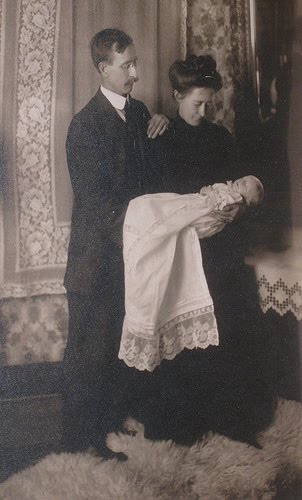
2. The "Last Sleep" Aesthetic: Most commonly used for children, this style depicted the deceased as if they were resting in a peaceful, "sweet dream." To add a sense of naturalism and comfort, parents were often photographed holding their children in their arms, as if they were simply napping.
3. The Formal Deathbed Portrait: This style made no attempt to simulate life. The subject was photographed directly on their deathbed or in a casket. Unlike the other two styles, these images were frequently adorned with heavy floral arrangements and greenery, which served as both a symbolic tribute and a practical necessity during the viewing process.



Historical Sources and Evidence
Social Class and Art:
Source: Linkman, Audrey. "The Victorians: Photographic Portraits." (Tauris Parke Paperbacks).
Fact: Linkman discusses how photography "democratized" the portrait, moving it from the aristocratic painting to the working-class photograph.
Post-Mortem Categories:
Source: The Burns Archive. (One of the world's largest collections of early medical and memorial photography).
Fact: Stanley B. Burns, M.D., identifies these three specific categories as the primary modes of 19th-century memorialization.
Technical Clarity:
Source: "The Daguerreotype: Nineteenth-Century Technology and Modern Science" by M. Susan Barger and William B. White.
Fact: This technical history confirms that because the deceased did not move, they often appear with "uncanny" sharpness in early long-exposure photography compared to the living.
No comments:
Post a Comment