
Mardi Gras, literally "Fat Tuesday," has
grown in popularity in recent years as a raucous, sometimes hedonistic event. The day is also known as Shrove Tuesday (from "to shrive," or hear confessions), Pancake Tuesday, and Fette Dienstag. The custom of making the Lenten fast required Christians to abstain from rich, calorie-dense foods—specifically eggs, milk, sugar, and butter. To ensure these perishable staples did not go to waste, families would gather on Shrove Tuesday to use them up in a final, indulgent meal of pancakes or fritters.
This culinary tradition highlights the cyclical nature of the season: it is a final, intentional clearing of the pantry before a period of self-denial. Just as the feasting of Carnival contrasts with the solemnity of Lent, the humble pancake has become a universal symbol of this transition. Whether one calls it Shrove Tuesday or Mardi Gras, the essence remains the same—a brief, joyous acknowledgment of earthly pleasures before turning toward the reflective, inward focus of the Lenten season.

But its roots lie in the Christian calendar, as the "last hurrah"
before Lent begins on Ash Wednesday. That's why the enormous party in New
Orleans, for example, ends abruptly at midnight on Tuesday, with battalions of
streetsweepers pushing the crowds out of the French Quarter towards home.
What is less known about Mardi Gras is its relation to
the Christmas season, through the ordinary-time interlude known in many
Catholic cultures as Carnival. (Ordinary time, in the Christian calendar,
refers to the normal "ordering" of time outside of the Advent/Christmas
or Lent/Easter seasons
Carnival comes from the Latin words carne vale,
meaning "farewell to the flesh." Like many Catholic holidays and
seasonal celebrations, it likely has its roots in pre-Christian seasonal traditions. Some believe the festival represented the few days added
to the lunar calendar to make it coincide with the solar calendar; since these
days were outside the calendar, rules and customs were not obeyed. Others see
it as a late-winter celebration designed to welcome the coming spring. As early
as the middle of the second century, the Romans observed a 40-day fast, preceded by a brief season of feasting, costumes, and merrymaking.
The official colors of Mardi Gras, with their roots in
Catholicism, were chosen 10 years later: purple, a symbol of justice; green,
representing faith; and gold, to signify power.

So, you must be wondering why this massive party os thrown all arund the world at the same time every year?
Historically, this is exactly what’s happening with the Christian calendar. Because Easter moves around based on the moon, the 40 days of Lent, that period of fasting and reflection, also shift. Since Carnival is the "last hoorah" before that period of strict fasting, the party date has to shift right along with it to stay perfectly synced up.
The Seasonal Reset: It’s the ultimate "spring fever." Whether it's an ancient pagan festival or a modern street parade, humans have always used this time of year to blow off steam, dress up in masks (which is super freeing, by the way), and shake off the winter doldrums before the planting season begins.
In short, Carnival’s timing is a mix of religious calendar synchronization and universal human instinct.
Because the dates for Lent change every year based on the lunar-dependent date of Easter, Carnival follows suit, acting as a final "party before the fast." However, the impulse to celebrate goes back even further to ancient traditions meant to shake off the winter blues and welcome spring. As European explorers traveled, they brought these traditions with them, and local cultures around the world put their own unique spin on the festivities.

-The 10 best carnivals around the world are these :
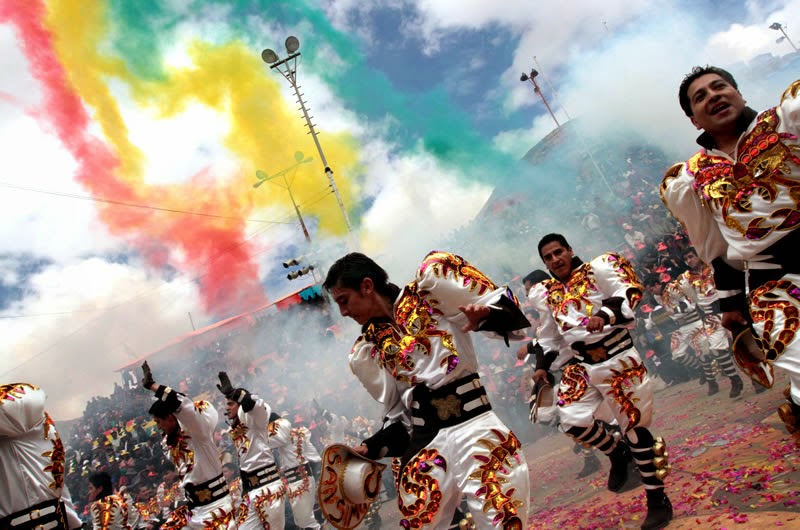
- Carnival of Oruro, Bolivia
- Mardi Gras, New Orleans


.jpg)



- Carnevale, Venice, Italy


- Carnival, Rio de Janeiro, Brazil


- Karneval, Cologne, Germany


- Carnival, Martinique


- Fiesta de las Flores y las Frutas, Ecuador


- Patras Carnival, Greece


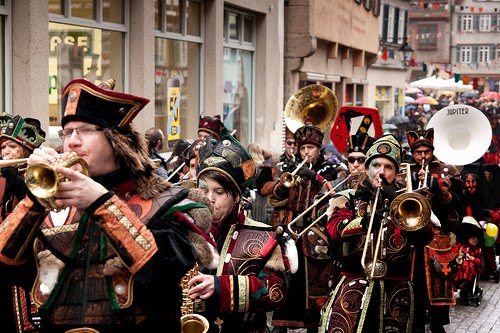
- Fasching, Germany


- Carnival, Sitges, Spain


No comments:
Post a Comment