The Seventh Cloud: Photography

Translate this blog to: Français,Deutsch,Spanish and more!

Showing posts with label Photography. Show all posts

Monday, May 25, 2026

From Canvas to Camera: The Accessibility of Memorial Art


Before the advent of photography, the ability to preserve a loved one’s likeness either in life or in death was a privilege reserved for royalty and the wealthy, who could commission expensive oil paintings to immortalize their lives. When the daguerreotype was first introduced, it remained a significant investment. However, many families who could not otherwise afford a portrait made a rare financial exception upon the passing of a family member.

These memorial images were not always solitary portraits. It was common for the deceased to be included in a "final family reunion" within a garden, around a dining table, or in the family living room, documenting the complete family unit one last time.

The Museum of Mourning Photography & Memorial Practice archive is an investigation into human ritual.


The practice of gathering for a final family reunion became deeply significant, leading families to do so when facing a time of loss/ During the Victorian Era, this custom was culturally accepted and perhaps even expected by society.

As previously explained in other posts, ordinary families could not always afford to hire a photographer to document life, but death was a serious matter. This is why we usually see post-mosrtem photos of older individuals or youg children.

Just as you would if you were sitting for a painted portrait, decisions were made about how the deceased would pose. Looking at photographs from that era, we see some subjects placed inside a coffin surrounded by flowers, others resting on a bed surrounded by family members and some even posed in a lifelike manner. 


When I first heard about Mortuary photography , which was back in 2001 when I first saw the movie: The others ( I would recommend to see it) , I was absolutely fascinated. Throughout the years, I have looked at more and more of these photos, but just everything else in real life and online, there are fake photos out there. I previously shared some of these images because I am no expert and I used to trsut "the Almighty internet" thinking that if it was online, it had to be real. It turns out, that isn't always the case. Please forgive me if I still do so, although I will try to look harder for better examples. 


A memorial photograph is usually legitimate when:

  • The mortal remains are inside a coffin.

  • The deceased is surrounded by flowers and a cross (or other religious artifacts).

  • The deceased is surrounded by people and has their eyes closed and mouth slightly open while laying back (which would look unnatural if they were standing or sitting in a chair like everyone else).

  • The people surrounding the departed are dressed in black.

  • The subject is in a cemetery or next to a grave, surrounded by a group just before burial.

  • The subject has eyelids painted to look like open eyes, but you can easily tell they are not real.


Those are the usual telltale signs when determining if a death photograph is the real deal.Why people lie about which photos are Remembrance photography? Some people don't know, some people are just interested in the story and how interesting these images are and some are just interested in selling these photos as curiosities, even if they are photos of living people. 


Please leave a comment. I love to hear your thoughts. 


Some photography sources: 
https://clements.umich.edu/exhibit/death-in-early-america/post-mortem-overview/


Friday, May 22, 2026

Now I Lay Me Down To Sleep : modern remembrance photography

I recently came across an incredible organization called Now I Lay Me Down to Sleep (NILMDTS) and wanted to share the beautiful work they do. 

Since 2005, they’ve been providing professional remembrance photography to parents experiencing the loss of a baby. It’s a gift of healing—capturing those fleeting, precious moments and providing families with beautiful, retouched black-and-white portraits at no cost.

With over 80,000 sessions gifted worldwide, their volunteer photographers are truly doing heart-work. If you know a photographer looking to give back or a family in need of support

As you can see, post-mortem photography is still used, but that's a topic for a different post. 

Early infant loss

While stillbirths are the primary focus of Now I Lay Me Down to Sleep (NILMDTS), their services are not strictly limited to that. They provide " remembrance photography "for a range of situations involving early infant loss. Their photography service is viewed as a " gift of remembrance."


Read: Victorian Mourning and Post-Mortem Photography: A Cultural History Pt. 1


What is Remembrance Photography?

This is considered a compassionate form of photography nowadays that honors and preserves the memory of a loved one who has passed. This is often about infant loss or end-of-life moments. This kind of photography focuses on capturing respectful images that reflect love, peace, and connection. 

I have often explored the profound impact of post-mortem photography (PMP), its historical roots and its vital role in an era when visual keepsakes of loved ones were scared.

One might wonder: why do families in the 2020’s still seek PMP particularly for stillborn infants? While the era has changed, the underlying motivation remains the same. PMP reached its peak between 1860 and 1910. During this time, death typically occurred at home, and funerals were held in the parlor, It was natural for families to commission a final portrait in the comfort of their own home.

As the 20th century progressed, death shifted to hospitals and funeral homes. Society moved away from the Victorian obsession with mourning rituals, and the practice faded.

However, in the modern world, grief still seeks a tangible connection. While parents may keep a lock of hair or a tiny garment, professional photography offers something unique: a gentle, permanent visual memory of how their baby looked. These photographs are capture with immense care, providing parents a way to honor their child and carry their image forward with love. 


Read: Post-Mortem Photography: A Historical and Cultural Ritual of Grief ( Pt 4 )

Post Mortem photography has also been recently named as modern remembrance photography , I imagine some reasons are that this kind of photography is dedicated to infant, so the name is less mournful and more soft, and because this service is offered people wanted to rebrand it as part of the mourning process, which is understandable.

Victorian post-mortem photographs were more about documenting the death and getting an image of the person, more than creating a thoughtful memory that represented the (modern) love and something beautiful that didn’t make us think about death or coffins.


Stillbirth rates in the USA 

According to the latest provisional data released by the CDC and the United Nations (UN IGME/UNICEF) as of early 2026, here are the current numbers for stillbirth rates:

United States Stillbirth Rates

The most recent report from the Centers for Disease Control and Prevention (CDC), published in late 2025/early 2026, shows a slight improvement in U.S. rates.

  • Rate: 5.41 per 1,000 live births and fetal deaths (provisional 2024 data).
  • Total Number: Approximately 19,756 stillbirths (fetal deaths at 20 weeks of gestation or more).
  • Trend: This represents a 2% decline from the previous year.
  • Significant Disparity: The rate remains significantly higher for Black (9.96) and Native Hawaiian or Pacific Islander (10.21) mothers compared to White (4.54) or Hispanic (4.76) mothers.
  • Source: CDC National Center for Health Statistics (NCHS), National Vital Statistics System (NVSS).
Here you can reach out to them: 

https://www.facebook.com/nilmdts/about

https://www.nowilaymedowntosleep.org/


Thursday, October 1, 2015

{ Urban Photography } in La Paz.


Come to Bolivia and visit La Paz , you will find it to be a great, busy, crazy and different place to be . Where the modern world meets the past in every corner!

If you want to see more photos, please visit { 7 Fotos } to see a little more of the photos I took a while ago.


Thursday, March 12, 2015

This Is What Fantasies Are Made Of: The Psychology Behind Our Deepest Desires


We’ve all heard the phrase "it’s just a fantasy." 
But have you ever wondered why certain themes
 recur so consistently across the human landscape? 
Far from being random, our collective daydreams often act as a mirror, 
reflecting our needs for power, surrender, and deep-seated connection.


The Allure of the "Power Play"

One of the most common themes in mainstream fantasy involves the shifting of power dynamics. In a world where we are constantly pressured to be "in control" of our careers, finances, and social lives, the idea of relinquishing that control—or taking it in a safe, consensual environment—is incredibly liberating.

  • The Appeal: It provides a mental vacation from responsibility.

  • The Reality: It’s less about the "act" and more about the psychological release of being cared for or being the one in charge.

The "Taboo" and the Thrill of the Forbidden

Human beings are naturally curious. When society places a "do not touch" sign on a concept, it instantly becomes a focal point for our imagination. This doesn't mean we actually want to break the rules in real life; rather, the mind enjoys the adrenaline rush of exploring boundaries within the safety of a thought.


The Role of "The Stranger" or Mystery

The popularity of "anonymity" or "roleplay" fantasies often stems from a desire to escape our own identities. For a few moments, you aren't a parent, an employee, or a neighbor—you are someone entirely different.

Expert Insight: Psychologists often suggest that fantasies aren't necessarily "blueprints" for what we want our daily lives to look like. Instead, they are "compensatory"—they give us the emotional flavors that are missing from our 9-to-5 routines.


Why We Dream: The Benefits of a Healthy Fantasy Life

Exploring these mental landscapes can actually be a sign of a healthy, creative mind. Here’s why:

  1. Stress Reduction: Like a good movie, a fantasy allows the brain to "reset" and escape mundane stressors.

  2. Self-Discovery: Understanding what sparks your interest can help you communicate your boundaries and needs more clearly.

  3. Safe Exploration: The mind is a sandbox where you can test-drive feelings and scenarios without real-world consequences.


The Bottom Line

Fantasies are a natural part of the human experience. They are the stories we tell ourselves to explore the complexities of intimacy and the vastness of our own imaginations. By understanding the why behind the what, we can appreciate our desires as fascinating windows into the human soul.

Wednesday, February 18, 2015

The Last Hoorah: Carnival Around the World – History, Traditions & Top 10 Carnival Celebrations


Mardi Gras, literally "Fat Tuesday," has grown in popularity in recent years as a raucous, sometimes hedonistic event. The day is also known as Shrove Tuesday (from "to shrive," or hear confessions), Pancake Tuesday, and Fette Dienstag. The custom of making the Lenten fast required Christians to abstain from rich, calorie-dense foods—specifically eggs, milk, sugar, and butter. To ensure these perishable staples did not go to waste, families would gather on Shrove Tuesday to use them up in a final, indulgent meal of pancakes or fritters.

This culinary tradition highlights the cyclical nature of the season: it is a final, intentional clearing of the pantry before a period of self-denial. Just as the feasting of Carnival contrasts with the solemnity of Lent, the humble pancake has become a universal symbol of this transition. Whether one calls it Shrove Tuesday or Mardi Gras, the essence remains the same—a brief, joyous acknowledgment of earthly pleasures before turning toward the reflective, inward focus of the Lenten season.


But its roots lie in the Christian calendar, as the "last hurrah" before Lent begins on Ash Wednesday. That's why the enormous party in New Orleans, for example, ends abruptly at midnight on Tuesday, with battalions of streetsweepers pushing the crowds out of the French Quarter towards home.
What is less known about Mardi Gras is its relation to the Christmas season, through the ordinary-time interlude known in many Catholic cultures as Carnival. (Ordinary time, in the Christian calendar, refers to the normal "ordering" of time outside of the Advent/Christmas or Lent/Easter seasons

Carnival comes from the Latin words carne vale, meaning "farewell to the flesh." Like many Catholic holidays and seasonal celebrations, it likely has its roots in pre-Christian seasonal traditions. Some believe the festival represented the few days added to the lunar calendar to make it coincide with the solar calendar; since these days were outside the calendar, rules and customs were not obeyed. Others see it as a late-winter celebration designed to welcome the coming spring. As early as the middle of the second century, the Romans observed a 40-day fast, preceded by a brief season of feasting, costumes, and merrymaking.

The official colors of Mardi Gras, with their roots in Catholicism, were chosen 10 years later: purple, a symbol of justice; green, representing faith; and gold, to signify power.


So, you must be wondering why this massive party os thrown all arund the world at the same time every year?

Historically, this is exactly what’s happening with the Christian calendar. Because Easter moves around based on the moon, the 40 days of Lent, that period of fasting and reflection, also shift. Since Carnival is the "last hoorah" before that period of strict fasting, the party date has to shift right along with it to stay perfectly synced up.

The Seasonal Reset: It’s the ultimate "spring fever." Whether it's an ancient pagan festival or a modern street parade, humans have always used this time of year to blow off steam, dress up in masks (which is super freeing, by the way), and shake off the winter doldrums before the planting season begins.

In short, Carnival’s timing is a mix of religious calendar synchronization and universal human instinct.

Because the dates for Lent change every year based on the lunar-dependent date of Easter, Carnival follows suit, acting as a final "party before the fast." However, the impulse to celebrate goes back even further to ancient traditions meant to shake off the winter blues and welcome spring. As European explorers traveled, they brought these traditions with them, and local cultures around the world put their own unique spin on the festivities.


-The 10 best carnivals around the world are these :


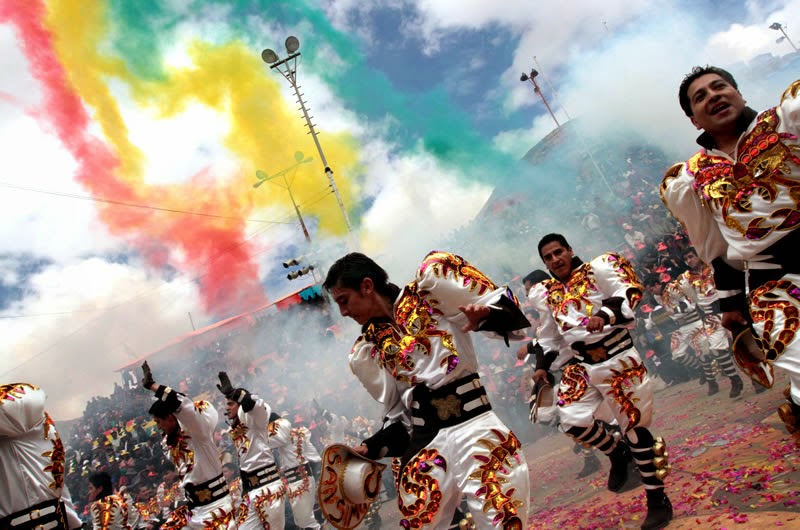
    • Carnival of Oruro, Bolivia


  • Mardi Gras, New Orleans


  • Carnevale, Venice, Italy


  • Carnival, Rio de Janeiro, Brazil


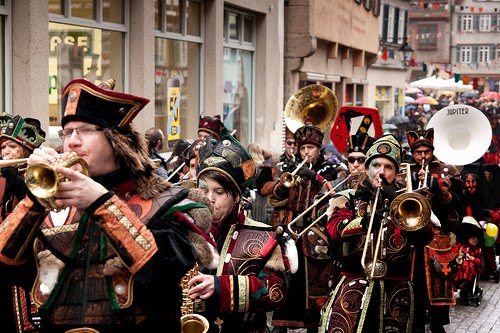
  • Karneval, Cologne, Germany


------------------
  • Carnival, Martinique


  • Fiesta de las Flores y las Frutas, Ecuador


  • Patras Carnival, Greece


  • Fasching, Germany


  • Carnival, Sitges, Spain


ad